
Date: Thursday, July 14, 2022 At 10 AM – 1 PM
In celebration of National Ice Cream Month, cool off with FREE ICE CREAM compliments of Innovative Orthodontic Centers, Innovative Pediatric Dentistry & Naperville Dental Specialists.

Date: Thursday, July 14, 2022 At 10 AM – 1 PM
In celebration of National Ice Cream Month, cool off with FREE ICE CREAM compliments of Innovative Orthodontic Centers, Innovative Pediatric Dentistry & Naperville Dental Specialists.
Updated 7/1/2022
At Naperville Dental Specialists, we are still committed to the safety of our patients and staff. We continue to have advanced protocols to make your visit safe. Please read below for a quick introduction to these steps, and do not hesitate to contact us with any questions or concerns.
All patients, regardless of vaccination status, are required to wear face coverings per guidance from the Centers for Disease Control and Prevention(CDC), Illinois Department of Public Health (IDPH) and the American Dental Association (ADA).
A quick health questionnaire should be completed 24 to 48 hours prior to the in-office appointment.
As always, we will continue our high-level disinfection between patients, hospital grade sterilization of instruments, and appropriate use of personal protective equipment.
Please reschedule your appointment if anyone in your household has been sick in the last 14 days.
Each member of our team has completed additional awareness and prevention programs to enhance their knowledge to provide safe dental care. Each day, we complete health checks for our team with no-touch temperature checks and a quick set of questions.
Thank you for your understanding as we work together to achieve your best smile! As guidance for COVID-19 prevention changes, we’ll keep you updated on what’s happening in the office. Please don’t hesitate to reach out with any questions! We are looking forward to seeing you soon!
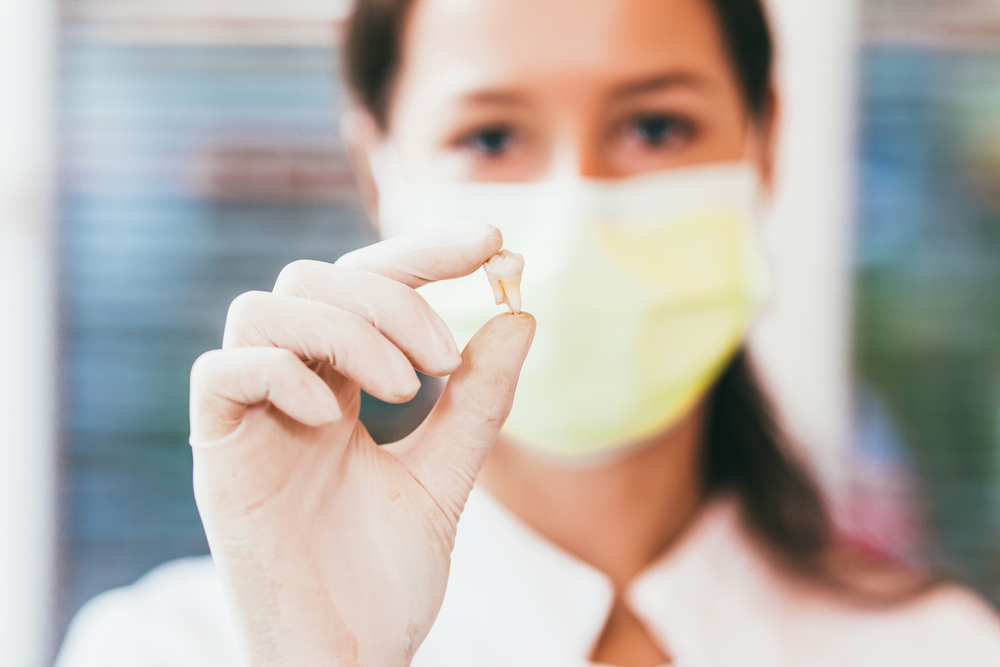
While our Naperville dentists always try to save a patient’s natural tooth, sometimes, due to severe decay, damage or periodontal disease, a tooth extraction is unavoidable. The good news is, we use cutting-edge technology and techniques to make removing a tooth as quick and painless as possible. We also offer a full range of tooth replacement options, including dental bridges and dental implants.
The team at Naperville Dental Specialists will walk you through exactly what to expect during and after a tooth extraction, but we know having answers in advance can make you feel more relaxed and confident. That’s why, in this post, we’ll be taking an in-depth look at the tooth extraction healing process.
Before we get to tooth extraction healing, let’s discuss what happens during the actual procedure. When we perform a tooth extraction at our Naperville practice, we numb the tooth and the surrounding area with a local anesthetic. If you’re feeling anxious or you’re undergoing a surgical extraction, such as for impacted wisdom teeth, we can also administer sedation to ensure you’re completely at ease.
Once you’re numb and/or sedated, your dentist or oral surgeon will use a special tool to rock the tooth and widen the socket. They’ll then ease the tooth out. In some cases, they may need to section the tooth, which means breaking it into smaller pieces for easier removal. You won’t feel any pain during a tooth extraction, just a little bit of pressure.
After extracting the tooth, the doctor will clean the area. If you’re planning on getting a dental implant, if necessary, at this point, we can place bone grafting material into the empty socket to ensure there is adequate bone to support the implant. We may or may not close the site with a few sutures, depending on which tooth was removed.
Every patient is unique and some people heal more quickly than others. However, while it does depend on your natural biology and the complexity of your case, in general, the tooth extraction healing stages are as follows:
For the first 24 hours after your tooth extraction, you may experience swelling, bleeding and some discomfort. This is all totally normal. A blood clot will start to form, which is necessary to stop the bleeding. About 24 hours post-extraction, swelling should peak and then begin to subside.
Your body will do the majority of its healing in the first two days after the procedure. You’ll want to follow our post-op instructions carefully and get plenty of rest. You may still have soreness at the extraction site and a small amount of bleeding. Once the clot forms, it will start to transform into granulation tissue, a mixture of white blood cells, blood vessels and collagen. The granulation tissue helps prevent infection and fills in the hole left behind from the extraction.
About three days post-procedure, swelling should be minimal and bleeding should have stopped. The area may be a little tender. The empty tooth socket will be on its way to healing, however, you’ll want to continue following your after-care instructions to help keep the clot in place. By 72 hours post-extraction, you might notice that the hole is starting to close.
Between seven and 10 days after the extraction, the opening where your tooth was should be closed, or at least very close to it, and a new layer of gum tissue will have begun to form. If we used dissolvable stitches, they’ll start to disappear. You shouldn’t have swelling, bleeding or pain at this stage of the healing process.
Three to four weeks after the tooth extraction, the extraction hole will be closed, though you may still have an indentation for a few more weeks.
For a surgical extraction of an impacted wisdom tooth, the jawbone will have to heal as well, which can take several months. While this might sound like a long healing period, the truth is, most patients feel “back to normal” within a few days, but it takes more time for the bone tissue in the jaw to regenerate.
During the first 24 hours after a tooth extraction, you’ll see a hole where the tooth once was. This empty socket will look deep red and a blood clot will form that reaches to about the level of the gumline. The tissue around the socket might appear whitish in color due to trauma.
After two to three days, the hole will look smaller and you’ll notice new gum tissue has started to form around the edges. Around this time, we sometimes get calls from patients concerned about white stuff during their tooth extraction healing.
As long as you’re not experiencing severe pain, the white stuff inside of the tooth socket is likely granulation tissue and not a sign of infection.
As we said, granulation tissue is made up of collagen, blood vessels and white blood cells. It looks creamy white and typically develops two to three days after the extraction once the clot has formed. It helps protect the clot and cover the wound.
By one to two weeks after the tooth extraction, a normal socket will be pink in color instead of dark red. Most of the gum tissue will have healed and the socket will look nearly closed. For larger teeth, such as molars or wisdom teeth, healing can take a bit longer. At the two-week mark, you might still notice a pretty visible indentation.
Animated-Teeth has a guide with pictures of what a tooth extraction should look like when healing. Though your extraction site may look slightly different, seeing the visuals can be helpful and give you a basic idea of what’s normal and what’s not.
Now for the million-dollar question: How long does pain last after a tooth extraction? It varies depending on your body and the tooth that was extracted. For a simple extraction, such as the removal of an incisor or a baby tooth, pain lasts, on average, one to three days.
Pain after a tooth extraction can last longer for teeth with deep roots or those that were surgically extracted. In these cases, discomfort can continue for about a week, with some patients noticing an increase in pain around day five and then a gradual decrease.
If you’re still experiencing tooth extraction pain after seven days, it’s a good idea to check in with your dentist. While a bit of tenderness around the socket is to be expected, significant pain after the first week can be a concern.

Yes. When you visit our practice for a tooth extraction in Naperville, we’ll provide you with aftercare instructions to follow. In general, you’ll want to stick with the following guidelines:
First 24 Hours
After the First 24 Hours:
If you’re experiencing pain after a tooth extraction, you probably won’t be up for eating a big meal. But keep in mind, good nutrition will help with the tooth extraction healing process.
As for what to eat after a tooth extraction, during the first 24 hours, liquids or cold, creamy foods will be your best bet. Protein shakes, smoothies (avoid fruit with seeds), yogurt, ice cream and pudding are all good options.
Once you feel ready, you can move on to soft foods. Eat softer foods for about a week post-op. In addition to those suggested above, some of the best soft foods for after tooth extractions include:
After a tooth extraction, avoid:
While there isn’t a magic way to make a tooth extraction heal faster, following your post-op instructions will help with your recovery and prevent complications. As with any type of oral surgery, rest, eating a soft foods diet, using an ice pack, maintaining good oral hygiene and avoiding using a straw, swishing or smoking will promote optimal healing.
Are There Any Post-Extraction Complications I Should Look Out For?
Infections after a tooth extraction are rare, but you should give our office a call if you experience any signs of infection, including:
Another issue that can occur after an extraction, particularly after wisdom teeth removal, is dry socket. Dry socket, technically called alveolar osteitis, is when the blood clot at the extraction site fails to form or dislodges in the early stages of healing. When this happens, it can leave the nerve and bone exposed in the socket.
Though dry socket is painful, it’s easily treated. Contact us right away and we’ll help you get relief.
If you suspect you need to have a tooth extracted, schedule an appointment at Naperville Dental Specialists.
With modern technology and a team of dentists and specialists, we can take care of all of your dental needs in one location, from the extraction to replacing your tooth. Of course, we’ll also provide detailed information to help you through the tooth extraction healing process, so you can get back to eating and smiling quickly.
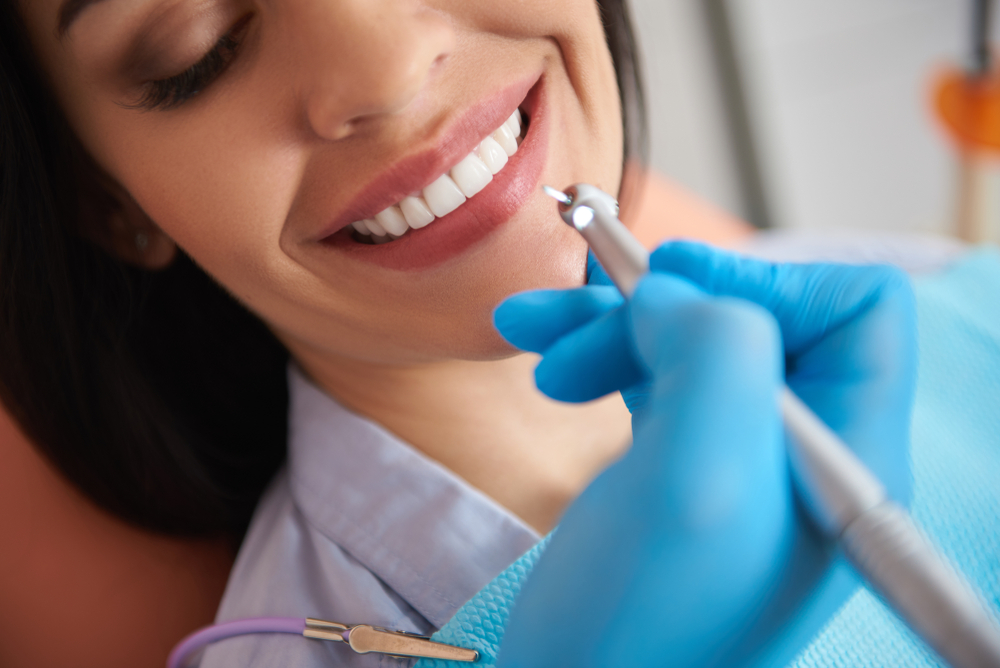
Juggling work, family, a social life and your own health and wellness is a lot. When you’re busy and trying to prioritize, unfortunately, preventative care appointments can get pushed down lower on your to-do list or avoided altogether. This is especially true of having a dental cleaning once every six months.
We get it! As an adult who knows how to brush and floss your own teeth, particularly if you don’t have any major dental problems, these routine visits can seem unnecessary. But, the truth is, they’re actually a crucial part of maintaining your oral health and forgoing them will end up costing you more time (and money) in the long run.
Here are 6 reasons you shouldn’t skip your dental cleanings:
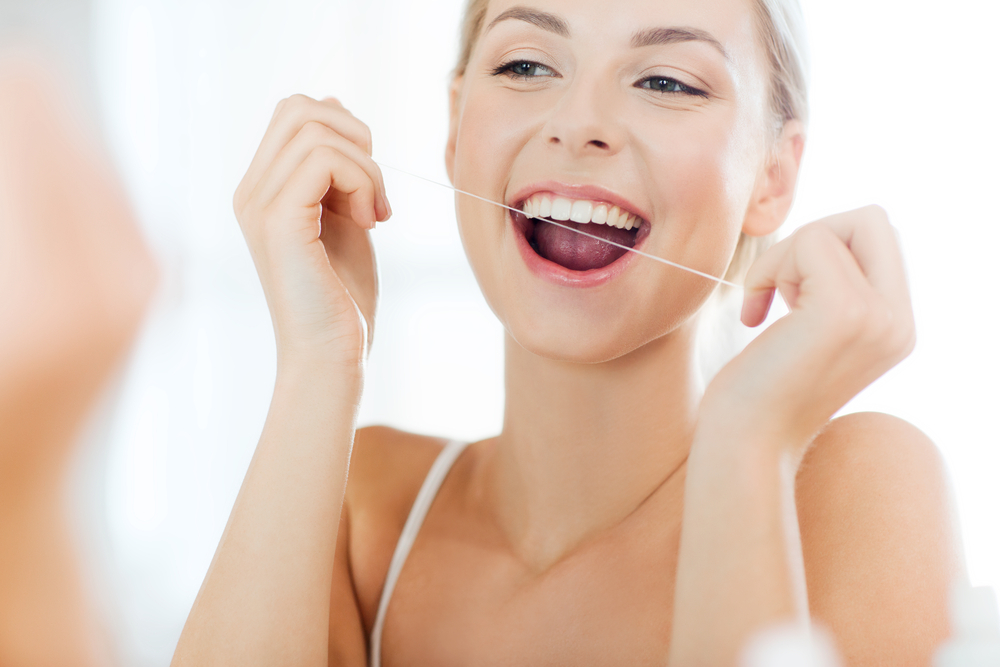
Brushing at least twice a day and flossing once daily play a huge role in keeping your teeth and gums healthy. However, there’s only so much you can do at home. When plaque (a sticky bacterial film) hardens and turns into tartar, or calculus, it can’t be removed with just a regular toothbrush and floss. The tartar will sit on your teeth, releasing acids that erode your tooth enamel, eventually causing cavities.
The bacteria in the plaque and tartar also irritate gum tissue and can result in a bacterial infection, known as periodontal disease, or gum disease. When you visit us for a Naperville teeth cleaning, the hygienist will use special tools to remove plaque and hardened deposits that you can’t get rid of on your own. This will go a long way in preventing tooth decay and gum disease. And prevention is always better than treatment!
And, since a routine dental cleaning is considered preventative care, it’s generally covered by insurance. Even without insurance, the dental cleaning cost is significantly less than the cost of treating a dental issue. If you don’t have insurance, we even offer a dental savings plan called VantageOne at our practice. When you purchase a membership, you’ll enjoy discounts, including 50% of dental cleanings, exams and x-rays!
Early detection is one of the most important benefits of a dental cleaning. While working on your smile, the hygienist gets an up close and personal look at your mouth. They can spot early tooth decay, signs of gingivitis, signs of oral cancer, faulty restorations and other dental concerns. Catching a cavity or faulty restoration early will mean much less invasive and expensive treatment. Sometimes, we can even stop or reverse early tooth decay and prevent it from turning into a cavity at all.
If we identify gingivitis, which is gum disease in its earliest stages, we can treat it while it’s still reversible. Once gingivitis progresses into periodontitis, it can be managed but not cured. Periodontitis is a leading cause of tooth loss in adults and as the infection spreads, it can also lead to tissue and bone loss.
As for oral cancer, early diagnosis is key. This type of cancer has a high mortality rate. It’s not because it’s inherently more dangerous than other types of cancers, but because it’s often detected in its advanced stages. During a Naperville teeth cleaning, the hygienist will look for suspicious bumps and lesions, as well as color changes in your gum tissue. The dentist can also perform a more comprehensive oral cancer screening as part of the dental exam that follows.
Regardless of what the problem is, treating any issue will be more successful, affordable and less time consuming if caught early. By skipping dental cleanings and exams, you’re actually increasing the likelihood that you’ll spend a lot more time in the dentist’s chair in the future.
The clean you get from a professional dental cleaning is hard to match. Your teeth and gums will feel refreshed and the hygienist will use specialized dental cleaning tools to remove surface stains from your tooth enamel. Your smile will look brighter and because we polish the teeth and create a smooth surface, your enamel will be better able to repel plaque in the weeks after your cleaning.
An excellent oral hygiene routine helps to keep your mouth smelling fresh. But, by removing those hardened deposits we talked about, regular professional cleanings are another important step in controlling the oral bacteria behind bad breath.
Of course, there are some general things most people should be doing like brushing twice a day for two minutes with a fluoride toothpaste and flossing once a day. That said, no two smiles are the same.
Your dentist and hygienist can only really offer truly personalized recommendations after assessing your oral health and seeing firsthand how well your oral hygiene routine is working (don’t worry, it’s a no judgment zone here!). We’ll then give you guidance to help you create a strong homecare routine that meets your unique needs and let you know how often to have a dental cleaning and exam.
Your oral health is closely tied to your overall health. In fact, an infection in a tooth can spread to other areas of the body, and the toxins and inflammation from periodontal disease may cause systemic issues. Periodontal disease has been tied to a number of conditions, including diabetes, heart disease, Alzheimer’s disease, stroke, preterm birth and more.
Regular dental care, including routine dental cleanings, helps to stop tooth decay and gum disease in their tracks or, at the very least, allow for early intervention before they impact your oral and overall health. By caring for your smile, you’re caring for your entire body.
Preserve your oral health and prevent future problems by keeping up with your regular dental cleanings and exams. Our expert Naperville dentists and hygienists offer thorough, yet gentle care to bring out the best in your smile. Schedule your next dental cleaning and exam at Naperville Dental Specialists.
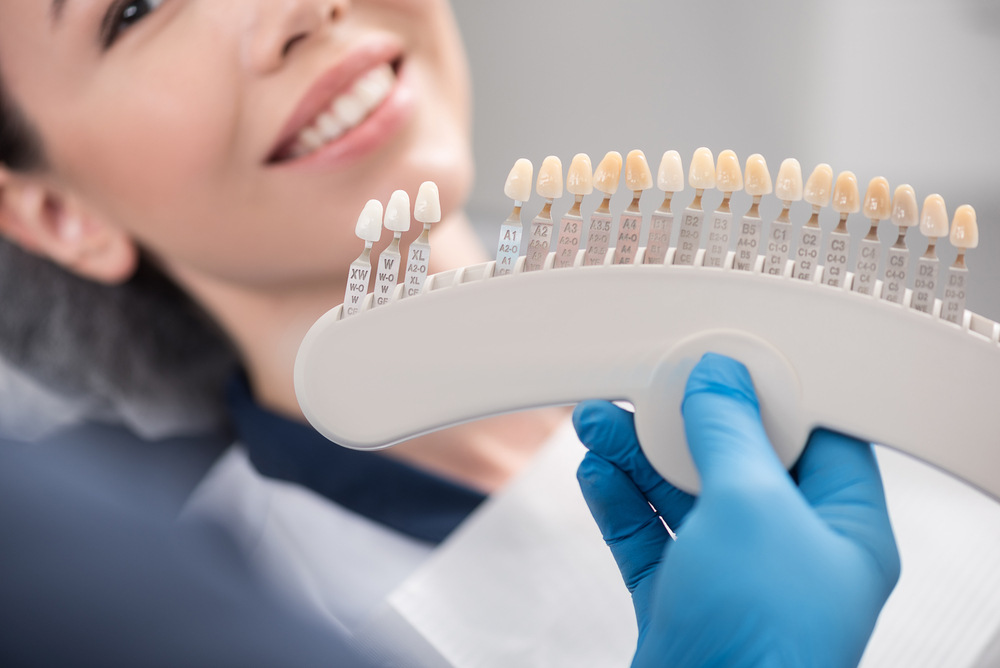
You’ve probably heard the terms “cosmetic dentist” and “cosmetic dentistry.” In fact, we offer cosmetic dentistry in Naperville, IL at our practice. But what exactly is a cosmetic dentist and what do cosmetic dentists do? Are they the professional to turn to for cavities or do they only fix esthetic concerns? In this post, the team at Naperville Dental Specialists will be delving into the topic to give you a better understanding of this area of dentistry.
Cosmetic dentistry is also called esthetic dentistry. A cosmetic dentist is a doctor who focuses on improving the appearance of teeth and gums to create a beautiful smile. While esthetics might be the main goal, as a dental professional, they also ensure treatment complements the oral and overall health of the patient.
As for how to become a cosmetic dentist, the training is the same as that of a general dentist, because, technically, a cosmetic dentist is a general dentist. They attend four years of dental school where they earn their Doctor of Dental Medicine or Doctor of Dental Surgery degree.
While cosmetic dentistry isn’t a dental speciality like orthodontics or prosthodontics and doesn’t require attending a residency program, cosmetic dentists take courses and seminars in cosmetic dentistry. Others, such as those at Naperville Dental Specialists, are members of the American Academy of Cosmetic Dentistry and do much more extensive training in esthetic smile design and advanced cosmetic procedures.
So, what do cosmetic dentists do? Do cosmetic dentists do surgery? Do cosmetic dentists do braces? We get these questions a lot. While, yes, cosmetic dentists do surgery, such as periodontal plastic surgery and some even offer dental implants, it’s usually advisable for patients to see a specialist like an oral surgeon, periodontist or prosthodontist, especially if they have a complex case. Specialists complete an additional two to three years of rigorous training in a residency program after dental school and the sole focus of their practice is that of their specialty.
And, yes, cosmetic dentists do also sometimes offer braces or Invisalign®. But, again, seeing a specialist is your best bet. An orthodontist also completes specialty training in a residency program, giving them the expertise to straighten the teeth and align the bite in the healthiest, most effective way possible.
So, what do cosmetic dentists do? They treat a variety of concerns, such as discolored, chipped, misshapen, misaligned and missing teeth with the goal of helping your smile look its absolute best. Common cosmetic dental services include teeth whitening, porcelain veneers, cosmetic dental bonding, crowns and bridges. A cosmetic dentist combines art and science to design a smile that looks amazing and functions just as well.
Most cosmetic dentistry procedures are considered elective, however, many do provide restorative benefits too. For example, if you have a severely decayed tooth that requires a dental crown, a cosmetic dentist can remove the decay and protect your tooth with a crown. However, they’re going to tap into their expertise and artistry to design a beautiful, realistic-looking crown that enhances your appearance.
 Common Cosmetic Dental Procedures
Professional teeth whitening is a relatively affordable, fast way to give your smile a boost. While teeth whitening strips and other over-the-counter methods can brighten your enamel, they typically only get rid of surface stains and take several weeks of use to work. Professional in-office teeth whitening achieves much more dramatic results in just one session.
Our Naperville cosmetic dentists protect your gums and then use a professional-strength whitening gel. The gel is activated by a specially designed light and the solution breaks down stains on the teeth, including those that are deeper set. In less than an hour, you’ll have a significantly brighter smile. We’ll also give you post-whitening care instructions to help you maintain your results for a long time. In fact, your smile will always be whiter than it was before the procedure.
Dental veneers, or porcelain veneers, are the ultimate cosmetic dental procedure, because they can give your smile an entirely new look. The treatment involves bonding thin pieces of porcelain to the front of your teeth, masking imperfections.
With veneers, you can tackle a range of concerns, including gaps between the teeth, chipped or broken teeth, discoloration, misshapen or crooked teeth and short or worn teeth with a single procedure. Once your veneers are in place, you’ll have the straight, white teeth you’ve always dreamed of.
When patients visit with a Naperville cosmetic dentist at our practice, we use our iTero® digital scanner to take digital images of your teeth. Once your scans are uploaded into our treatment planning software, your cosmetic dentist designs custom veneers that match the color, shape and even translucency of your natural enamel. They then remove a little bit of your enamel to get an optimal fit before cementing your veneers in place.
A dental crown, or cap, covers your entire tooth to the gumline, restoring its appearance, strength and function. Typically, crowns are needed when a tooth is decayed, cracked or damaged and can’t be repaired with a filling.
Though dental crowns can be used for esthetic purposes, since the natural tooth must be recontoured to fit under the crown, they’re usually reserved for teeth that are missing a lot of natural structure. For someone with healthy teeth, veneers or cosmetic dental bonding would be less invasive options.
We offer different types of dental crowns at our practice. If you need a crown on a tooth that’s visible when you smile, getting a porcelain crown from a cosmetic dentist will give you the most natural looking results. The dentist will design a crown that blends in flawlessly and mimics the natural translucency, color and contours of a real tooth.
A dental bridge is used to replace one or more missing teeth. The most common type of bridge is a fixed bridge. It consists of two crowns with a filler tooth in the center (the pontic). The teeth on either side of the gap are recontoured to fit under the crowns, which are permanently bonded to the teeth. These abutment teeth support the replacement tooth that sits in the gap.
A good cosmetic dentist has the skill and eye for detail to create a bridge that looks beautiful and natural. At Naperville Dental Specialists, we use cutting-edge treatment planning software and high quality materials to give our patients durable, yet highly esthetic dental bridges.
Cosmetic dental bonding involves applying a custom-tinted composite resin to the tooth enamel. Once it’s hardened, the dentist shapes and polishes it to match the rest of your smile. It can cover imperfections like chips, cracks, small gaps, short or worn teeth, discoloration and misshapen teeth.
Cosmetic dental bonding is fairly affordable and doesn’t usually involve removing any tooth enamel, but it doesn’t last as long as veneers and, over time, the resin can darken. The procedure can be a good alternative to dental veneers for patients who only have one or two minor concerns they want to fix. It’s also preferable for kids and teens who are still developing and wouldn’t be candidates for a permanent treatment.
Whether or not cosmetic dental work is covered by insurance depends on the procedure, your insurance plan and the reason for the treatment. For the most part, treatments like teeth whitening or dental veneers are not covered by insurance. If treatment is both medically necessary and esthetic, such as getting a dental crown on a decayed or damaged tooth, then your dental insurance will likely cover a portion of the procedure.
At Naperville Dental Specialists, we offer a dental savings plan called VantageOne. When you purchase a membership, you can use the plan at our practice and receive discounts on all types of treatment, including cosmetic dental care. This will reduce your out-of-pocket costs if you don’t have insurance or it doesn’t cover the procedures you’re interested in.
Cosmetic dentistry prices vary depending on a number of factors, including the procedure(s) you’re getting, the practice and how extensive your case is. For example, the cost of dental veneers will be significantly higher than the cost of teeth whitening or cosmetic dental bonding. However, your smile makeover will be longer lasting and more dramatic. It really boils down to your priorities.
Another thing to consider is lab costs and materials. These are the factors that sometimes mean cosmetic dentistry prices will be higher than general dentistry prices. Why? Getting, say, a gold crown with the goal of restoring function from your general dentist doesn’t involve the level of planning and customization at a lab that getting a cosmetic porcelain crown does.
When you visit Naperville Dental Specialists for a consultation with a cosmetic dentist, they’ll perform an exam, talk with you about your goals and needs and evaluate your diagnostic records. They’ll then be able to provide you with personalized treatment recommendations and let you know how much it will cost upfront.
With so many areas of dentistry, it can be difficult to know how to find a good cosmetic dentist. Really, it comes down to training, experience and technology. While all dentists receive an overview of some of the components of cosmetic dentistry in dental school, you want to find a cosmetic dentist who has completed additional training in things like esthetic smile design or advanced cosmetic dental procedures. Their courses will have gone much more in depth into the nuances of designing a beautiful smile.
Technology is also important. The world of dentistry is always evolving and the tools available today are unparalleled. At Naperville Dental Specialists, we use digital scanning instead of uncomfortable, messy impressions, as well as CAD/CAM software that allows us to design restorations in three dimensions. When creating a dental crown, for example, we can use our software to make a mirror image of the tooth on the other side of your mouth, so that it matches exactly.
Digital tools are more precise and efficient. And, since we have an in-house lab, we use our technology to offer same-day crowns and veneers that meet our exacting standards. Don’t be afraid to ask about a cosmetic dentist’s training and experience, as well as the technology they use at your first visit.
To find out your options for a smile makeover, schedule a visit with a Naperville, IL cosmetic dentist today! Our caring, knowledgeable team and expert dentists will give you the personalized, high quality care you deserve.

Your alarm sounds, you roll out of bed and, if you’re like a lot of people, one of the first things you do is enjoy a cup of coffee (or two).
And while coffee smells and tastes amazing when it’s straight from your mug in the morning, the same doesn’t hold true when it comes to your breath. So, understandably, your natural instinct might be to brush your teeth after having your coffee to ensure your mouth is fresh and clean as you go about your day.
But there’s some debate about whether or not this is the right move. Well, the team at Naperville Dental Specialists is here to help. We’ll be weighing in on whether you should brush your teeth before or after coffee.
Drumroll please….you should brush your teeth before having coffee, according to our Naperville dentists. We know, we know, it feels like that goes against all logic. After all, doesn’t coffee stain teeth? Won’t you be stuck with coffee breath?
Yes, coffee does stain teeth and, sure, it can cause bad breath. However, there are two main reasons behind the recommendation for brushing your teeth before coffee:
The good news is, coffee (as long as you’re not adding sugar) doesn’t directly cause tooth decay and it’s no worse than any other drink that’s not water. However, the acidity, especially if you consistently brush your teeth right after your coffee, can eventually lead to enamel erosion, which will make you more susceptible to sensitivity and decay.
Aside from the acid, coffee stains teeth too. It’s pigmented and, over time, it’s notorious for causing discoloration.
But, overall, coffee may actually have some beneficial properties that can boost your oral health. For example, a 2009 study published in the Journal of Conservative Dentistry found that black coffee without any additives like sugar or cream helped prevent cavities thanks to its antibacterial effect. It’s thought the polyphenols in coffee are responsible for zapping bacteria.
The bottom line: stick with black coffee and hold off on brushing your teeth afterwards. As long as you maintain good oral hygiene, you should be perfectly fine drinking it.

Thoroughly rinsing your mouth with water after having a cup of coffee will go a long way in warding off coffee breath, keeping stains at bay and giving your mouth a clean sensation. Even better, rinse your mouth and then chew a piece of sugarless gum. (Bonus points if the gum contains xylitol since xylitol prevents bacteria buildup.)
Chewing sugarless gum after any meal or beverage is a good practice for getting your saliva flowing and helping to prevent cavities. Having a piece after coffee has the added benefit of freshening your breath.
If you drink a lot of coffee and other acidic beverages, you might also want to consider using a toothpaste for sensitive teeth that contains fluoride. The fluoride will help to remineralize your teeth and strengthen your enamel. Ingredients like potassium nitrate and stannous fluoride will reduce sensitivity by shielding the dentin and soothing the nerves inside of your teeth.
The other thing to keep in mind is that the debate about whether you should brush your teeth before or after coffee refers to brushing soon after drinking it. The American Dental Association recommends waiting 60 minutes after eating or drinking before brushing your teeth. So, if you’re not in a rush, you can wait an hour until your oral pH is back to normal and then brush your teeth without any negative effects.
Do you have more questions about your oral health? Schedule a visit with a Naperville dentist today. We can fill you in on everything you need to know about caring for your teeth and gums, including how to develop a smile-friendly morning routine.
If you’ve been brushing right after your coffee for years and now have sensitivity or discoloration, we can help with that too!

Apple cider vinegar has been touted as a cure-all for everything from heartburn to acne. While there aren’t a ton of studies to support many of the claims, the home remedy is still incredibly popular.
Recently, there have been articles and blog posts about the benefits of apple cider vinegar for oral health. What does apple cider vinegar do for your teeth? Recommendations include drinking a glass of it a day, using it as mouthwash and even rubbing it directly on the teeth to make them whiter.
But, before you jump on the apple cider vinegar bandwagon, get the facts from our Naperville general dentists.
So, what does apple cider vinegar do for your teeth according to proponents’ claims? Some say that when used as a mouthwash, it can kill the bacteria in the mouth that cause cavities and gum disease, and the potassium in the vinegar can help to strengthen teeth.
Yet, the most popular application is using apple cider vinegar for teeth whitening. Some suggest brushing it directly on the teeth, while others say to mix it with baking soda.
Apple cider vinegar is acidic. It typically has a pH between 2.5 and 3. For reference, distilled water, which is neutral, has a pH of 7. Any type of acid, including the acetic acid in apple cider vinegar, can erode tooth enamel. So, yes, drinking or swishing with large quantities of apple cider vinegar is bad for your teeth.
When the enamel breaks down, it leads to sensitivity and puts you at a higher risk for tooth decay. Eventually, as the underlying dentin is exposed, your teeth will also look yellow.
A 2014 study examined the erosive effects of different types of vinegar on tooth enamel. The researchers found that between 1% and 20% of the minerals in the enamel were lost when the enamel was soaked in various kinds of vinegar for four hours.
While the study did demonstrate that vinegar eroded teeth, it didn’t account for factors like the impact of saliva on the process, so more research is needed to understand the full extent of damage.
A 2012 case study of a 15-year-old girl whose enamel was significantly eroded found that the erosion was due to the daily glass of apple cider vinegar she drank for weight loss.
There are no conclusive studies on whether apple cider vinegar is more effective at killing cavity-causing bacteria in the mouth than any other remedies.
Studies, including one published in 2014, found that apple cider vinegar does make teeth whiter. However, though it has a minor bleaching effect, it can also damage the hardness of the enamel.
The American Dental Association has weighed in on the topic. Their stance? Don’t whiten your teeth with apple cider vinegar, because the prolonged contact can wear away enamel.
The minimal results that you’d get aren’t worth the risk. You’d achieve safer, much more dramatic results with a professional teeth whitening treatment at your dentist’s office.
 How to Protect Your Teeth From Apple Cider Vinegar
While large amounts of apple cider vinegar can damage your teeth, you don’t have to forgo it all altogether. Here’s how to protect your teeth from apple cider vinegar:
Unfortunately, there isn’t scientific evidence to back up many of the apple cider vinegar oral health claims. Because it’s acidic, it can actually lead to enamel erosion. To get whiter teeth or better oral health, talk with your dentist for personalized recommendations.
If you have oral health concerns or want to get whiter teeth, schedule a visit with a general or cosmetic dentist at Naperville Dental Specialists. We can give you personalized recommendations to improve your oral health or whiten your teeth in a way that’s safe and effective.

This month, we’re sharing another question the team at Naperville Dental Specialists received from a patient.
“I have a class reunion coming up in about one week. I don’t think that is enough time to get my teeth really white with over-the-counter whitestrips. Would professional whitening get my teeth really white by then?”Desiree M.
We’ll be answering Desiree’s question and discussing the different ways to get a brighter smile, the fastest way to whiten teeth and the types of teeth whitening we offer in Naperville, IL.
Before we dive into Desiree’s question about how to whiten teeth on a tight deadline, let’s talk about the different ways to whiten teeth in general and the pros and cons of each:
One option for low cost teeth whitening is to use a whitening toothpaste. You can opt for a traditional version like Crest 3D White Brilliance Toothpaste or Arm & Hammer Advance White Extreme Whitening Toothpaste.
While all toothpastes are abrasive, whitening ones are even more abrasive in order to remove surface stains from the teeth. However, when whisking away stains, the products also take off a microscopic layer of tooth enamel, which can be tough on your smile. So, they’re not recommended for people with sensitive teeth or weakened enamel.
In addition to traditional whitening toothpastes, there’s a lot of buzz about activated charcoal teeth whitening products. You typically mix the charcoal powder with water to create a paste that you then brush on your teeth with your toothbrush like you normally would. After letting it sit, you rinse it away.
While billed as a natural teeth whitening solution, charcoal whiteners are no more effective than other toothpastes. They’re safe but still only remove surface stains caused by environmental factors like drinking coffee or eating certain foods.
Over-the-counter teeth whitening kits come in two main forms: teeth whitening strips and trays. The at-home teeth whitening trays you can purchase online also sometimes include an LED light along with the trays and bleaching solution.
These are more effective than whitening toothpaste but still only get your teeth a few shades whiter. They can also cause or exacerbate tooth sensitivity. Whitening strips contain a layer of whitening solution and stick on your teeth. With the trays, you fill each tray, which looks like an Invisalign aligner, with bleach and let it sit on your teeth, with or without an LED light.
Another option for those who prefer to do their teeth whitening at home, is a professional take-home whitening treatment from your dentist. Your dentist will provide you with custom trays and a professional-grade whitening solution. Since your dentist will perform an exam first, you’ll have peace of mind knowing you’re a good candidate for whitening and that it won’t cause sensitivity or other issues.
While you will have to use the whitening kit daily for about a week, the bleaching solution is stronger than what you can get over the counter, meaning your teeth will be whiter than they would if you used a kit you ordered online. The results will also last longer.
When you get in-office, professional teeth whitening, your cosmetic dentist applies a professional-strength whitening gel to your teeth. A specially designed light is then used to activate the solution. Once activated, the whitening solution breaks down stains on your teeth, including deeper set stains that can’t be removed with other teeth whitening methods.

Getting back to Desiree’s question, the fastest way to whiten teeth is an in-office, professional teeth whitening treatment. It will dramatically whiten your teeth in about an hour and in a single office visit.
Professional, take-home teeth whitening would also brighten Desiree’s smile in a week – just in time for her reunion. However, the results wouldn’t be as dramatic as they would be with in-office whitening.
The majority of over-the-counter teeth whitening kits would not produce results in a week. Additionally, they don’t target deeper stains and won’t get teeth as white as professional treatment. The higher-concentration whitening solutions used by your dentist can only be purchased by professionals and aren’t available online or at a store.
At our practice, we offer both professional, take-home whitening kits and in-office, fast teeth whitening in Naperville, IL. Whichever option you choose, a Naperville cosmetic dentist will assess your teeth and gums and make sure you’re a good candidate for the treatment. Then one of our team members will go over the logistics, such as your teeth whitening cost.
If you opt for a take-home kit, you’ll be provided with all of the instructions you need, as well as a safe, effective whitening solution that you’ll apply using plastic trays.
With an in-office whitening treatment, we’ll apply a gel to your teeth and activate it using a special light. The process takes about an hour. Before you leave, we’ll give you post-whitening care instructions. By following the instructions and practicing good oral hygiene, your results can last for years.
Are you ready for a more dazzling smile? Schedule a visit with us to find out if you’re a candidate for professional teeth whitening in Naperville, IL. Book your appointment online or by calling us at (630) 848-2010.
Updated 06/15/2026
If you’re suffering from jaw pain or you’ve been diagnosed with a temporomandibular disorder (TMD), you’re probably wondering: What are the TMD treatment options?
The good news is there are solutions! And with proper homecare and professional treatment, such as physical therapy or a custom TMJ nightguard, you can minimize flare-ups and get back to normal functioning quickly.
In this post, we’ll be covering what TMJ is, home remedies for jaw pain, and the various treatment options available.
Before we dive into TMJ disorders and jaw pain treatment, let’s go over the basics. While people commonly call issues with the jaw “TMJ.” TMJ actually stands for temporomandibular joint and refers to the joint itself.
There is one TMJ on either side of the head that connects the jaw to the temporal bones in your skull. The joints allow you to move your jaw side to side and up and down. When you yawn, chew, talk, or open and close your mouth, your TMJ is hard at work.
Problems with the temporomandibular joint are technically called TMJ disorders, temporomandibular joint disorders (TMJDs) or temporomandibular disorders (TMDs). We know, it’s a lot of acronyms!
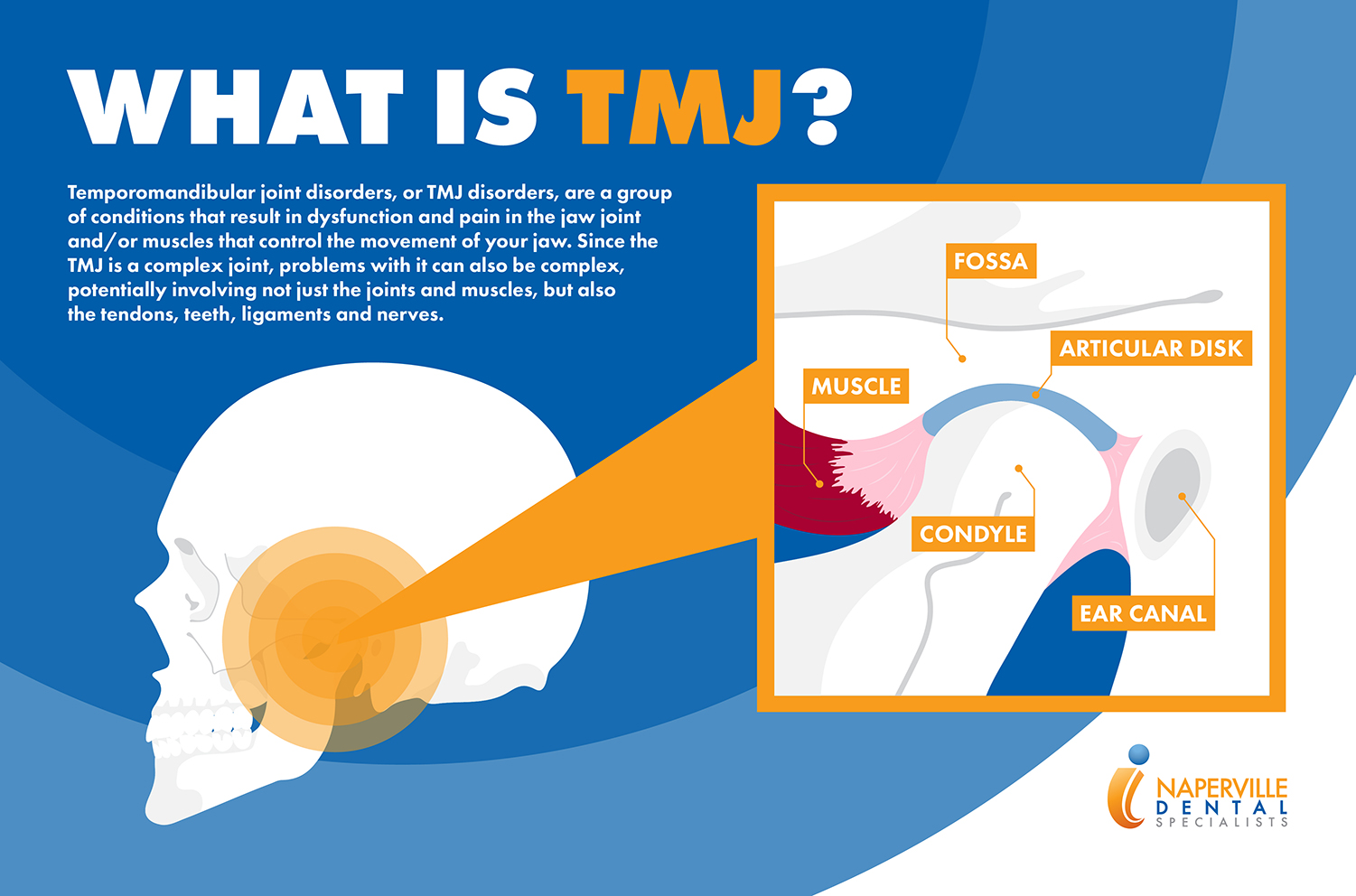
Temporomandibular joint disorders, or TMJ disorders, are a group of conditions that result in dysfunction and pain in the jaw joint and/or muscles that control the movement of your jaw.
Since the TMJ is complex, problems with it can also be complex, potentially involving not just the joints and muscles, but also the tendons, teeth, ligaments and nerves.
According to the National Institute of Dental and Craniofacial Research, TMJ disorders fall into three main categories:
A patient could have a TMJ problem that fits into one of the above categories, or even all three.
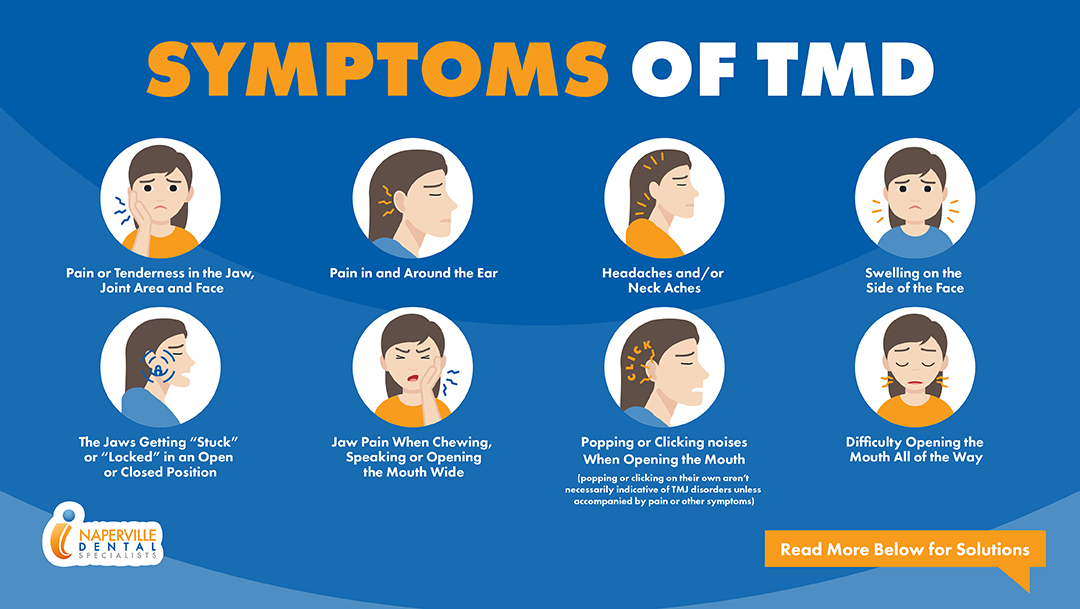
Symptoms of temporomandibular joint disorder may include:
TMJ disorders can also cause toothaches (in multiple teeth), ringing in the ears (tinnitus), dizziness and other issues.
While pinpointing the exact cause of a TMJ disorder can be difficult, many times it’s related to:
Additionally, TMJ disorders are more common in women than men, leading some experts to think there could be a link to hormones.
TMJ pain can range from mild to severe and it can be temporary or chronic. At Naperville Dental Specialists, we typically recommend trying TMJD home remedies first.
If you’re not able to get TMJ pain relief, then conservative measures are your next option. Permanent treatments, such as TMJ surgery, should always be the last resort.
Try the following home remedies on their own or in conjunction with professional TMD treatment to alleviate discomfort and encourage mobility in the joint:
During a TMD flare-up, avoid foods that are difficult to chew and/or require opening your mouth wide to bite into them.
Instead, opt for soft foods, such as yogurt, scrambled eggs, mashed potatoes, soft-cooked fish, bananas, applesauce, steamed vegetables, oatmeal, protein shakes and smoothies until your discomfort subsides.
When you do go back to your regular diet, make a concerted effort to chew with both sides of your mouth equally.
If you’re experiencing a muscle spasm, a dull ache or your jaw feels locked, hold a warm compress on the outside of your face in the area of the joint for 10-15 minutes several times a day. This will help loosen the muscles and boost blood flow.
If you have facial swelling, a cold pack will reduce inflammation and pain. For a DIY option, cover a bag of frozen vegetables or a Ziploc baggie of ice with a thin towel or cloth. Hold the cold pack against your face for 10-15 minutes, repeating as needed throughout the day.
Avoid chewing gum, extreme jaw movements (i.e., big yawns, yelling, singing) and chewing on objects (ice, pens, fingernails, etc.).
Non-steroidal anti-inflammatory drugs like ibuprofen can help with pain and swelling. For more severe TMJ pain, your doctor may prescribe stronger NSAIDs, muscle relaxants, or, in some cases, certain antidepressants.
Try to hold your head in a neutral position with your ears in line with your shoulders. If you work at a desk, keep ergonomics in mind.
Stress can make you clench your jaw and tighten your facial muscles, which may cause or exacerbate TMJ disorders. Try different stress-reduction methods, such as deep breathing or guided meditation, until you find one that works for you.
If you can’t seem to manage your stress and worry, consider scheduling an appointment with a therapist or counselor.
To prevent clenching, which will worsen your TMJ pain, try to keep your upper and lower teeth slightly apart.
This will take pressure off your jaw and allow your temporomandibular joints to rest and heal. If you need to, stick your tongue between your teeth.
When you’re no longer feeling major discomfort, TMJ exercises can encourage mobility in the joint and strengthen the chewing muscles to prevent TMD symptoms from returning.
The American Academy of Family Physicians has a list of TMJ exercises you may want to try.
For moderate to severe TMJ disorders that don’t improve on their own, professional TMD treatment could be necessary.
TMJD treatment options may include:
Custom nightguards or TMJ splints are a great way to get TMJ pain relief without medication or surgery.
These appliances are made for you by your Naperville dentist. Nightguards reduce the impact from clenching or grinding the teeth, which wards off damage to the teeth and jaw and reduces compression of your TMJ.
A TMJ splint holds the jaw in a stable position and takes pressure off the joints so they can heal.
At Naperville Dental Specialists, another TMJ treatment we offer is the TMJ NextGeneration device. This FDA-cleared device is custom-made to fit comfortably and discreetly in the ear canal.
It supports the temporomandibular joints and reduces TMJ pain, while also increasing your awareness of teeth grinding, clenching and other para-functional behavior.
Depending on the underlying cause of your TMJ disorder, physical therapy can be effective for strengthening the muscles that control jaw movement, increasing mobility and controlling discomfort and swelling.
Your dentist or doctor can refer you to a physical therapist who will show you different stretching and strengthening exercises. They might also use massage techniques, myofascial release, moist heat and ice, ultrasound and other modalities to help with pain and prevent future occurrences.
Sometimes, TMJ disorders respond to joint injections, including corticosteroid injections to reduce inflammation, trigger point injections to release muscle spasms, or Botox® injections to temporarily relax the chewing muscles and prevent them from contracting.
When a temporomandibular joint disorder is due to a bite imbalance, treatment with braces or Invisalign® may be recommended to align the teeth and jaws.
When the teeth are moved, the TMJ and surrounding structures will also be repositioned.
Before treating TMJ disorders with orthodontic treatment, however, we have to make sure any tooth movements will improve the position of the TMJ and help with pain and not make things worse.
In certain instances, if the way the upper and lower teeth meet is putting pressure on the TMJ and leading to pain, your Naperville cosmetic dentist can use dental crowns, bridges or, in the case of missing teeth, dental implants, to fix your bite problem and balance the biting surfaces of the teeth.
This, in turn, will help with healing.
Biofeedback, a technique that involves using electrical sensors to alert you to muscle tightening and jaw clenching, has become a popular TMD treatment option. The technique helps you to notice your internal cues so you can relax and prevent pain.
Other alternative options that some patients swear by are acupuncture and radio wave therapy.
If all of the other TMD treatments fail, surgery is an option. Since surgery is permanent and the different procedures have varying levels of effectiveness, this should be a last option.
Although no one can technically be referred to as a TMJ specialist or TMJ dentist since it’s not a recognized specialty, a sleep medicine dentist like Dr. Nicolette Michelson-Spencer can help treat TMJ pain and dysfunction. Dr. Spencer completed a mastery fellowship in oral sleep medicine through the American Academy of Dental Sleep Medicine.
One aspect of dental sleep medicine is bridging the gap between obstructive sleep apnea (OSA) and TMD management through custom oral appliance therapy.
If you’re suffering from TMJ pain and are unable to get relief, schedule a visit at Naperville Dental Specialists today.
Our team will use cutting-edge diagnostic technology to determine the underlying cause of your pain and then create a personalized TMJ treatment plan.
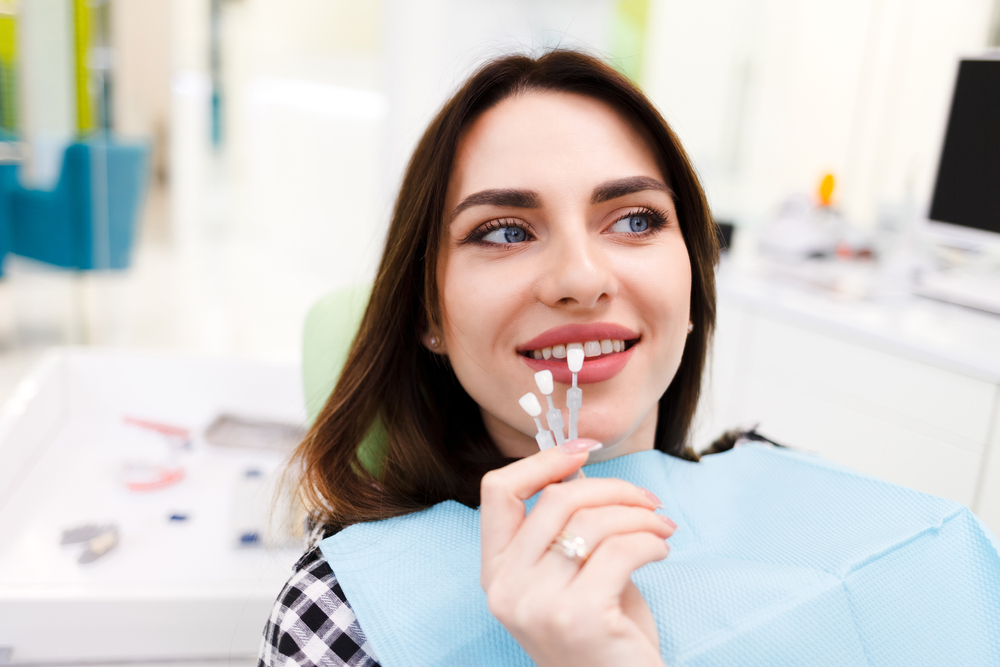
A Naperville cosmetic dentist at our practice received a question from Janet asking: Can veneers fix crooked teeth? Here’s exactly what she asked, which we’re sharing with her permission:
All my teeth are fine, except the two top front ones. These two teeth are crooked and kind of go past each other. I wonder if you can tell me if porcelain veneers can fix this kind of problem?
—– Janet
Janet isn’t the only one wondering about fixing crooked teeth with veneers. In fact, it’s a common question we get from our patients at Naperville Dental Specialists. To give more insight into porcelain veneers, including what the cosmetic dentistry solution can fix, we’ll cover:
Before we answer Janet’s question, let’s talk about what dental veneers are. Dental veneers, or porcelain veneers, are extremely thin pieces of porcelain that are bonded permanently to the teeth. The tooth-colored shells cover the front and side surfaces of the teeth in order to mask imperfections and improve the appearance of your smile.
There are different types of dental veneers. While options like press-on veneers and Lumineers® are advertised as easy to place, not every patient is happy with the appearance of press-ons or Lumineers on their teeth. For that reason, your Naperville cosmetic dentist will customize the veneers and the procedure to your individual needs and goals.
Getting porcelain veneers is painless and you’ll see results immediately, which is why they’ve become so popular with patients who want to transform their smile. Using a digital intraoral scanner, a Naperville Dental Specialists’ team member will take quick, comfortable scans of your teeth.
A computerized, 3D model of your mouth will be created and your cosmetic dentist will use CAD/CAM software to design custom porcelain veneers that match the shape, color and translucency of your natural enamel.
Once your dental veneers have been created, the dentist will then use special adhesive to bond the veneers to the surface of your teeth. Thanks to our high-tech approach and in-office lab, we can usually complete the procedure in two office visits or, in certain cases, even provide same-day veneers.
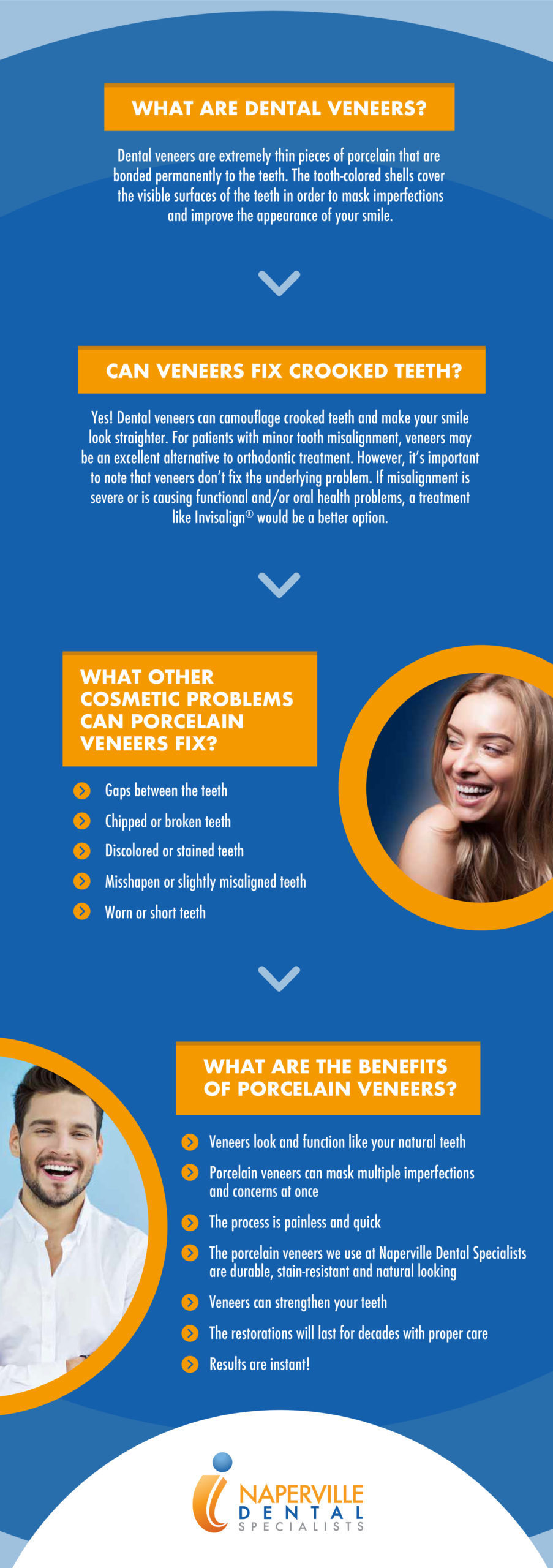
Yes, porcelain veneers can address the problem. They are very effective for fixing the appearance of crooked teeth. The end result will look stunning and natural.
However, veneers camouflage the issue and don’t alter the position of the teeth, so we typically only recommend fixing crooked teeth with veneers when the problem is cosmetic. For more complex cases of misaligned teeth where there are functional or oral health concerns, porcelain veneers may not be the ideal solution.
Innovative Orthodontic Centers, which is part of the Innovative Dental Partners umbrella, offers comprehensive orthodontic treatment, which, as we’ll talk about shortly, could be the better option for aligning the teeth and creating a healthy, functional bite when there is significant tooth misalignment.
That said, if your teeth are just slightly crooked and the misalignment isn’t affecting your oral health or your ability to chew, speak or breathe properly, then veneers are an excellent alternative to orthodontic treatment. Instead of spending months in aligners or braces, the porcelain veneers will be bonded to the front of your teeth, making them instantly look straight.
Once the veneers are in place, your smile will look whiter, healthier and straighter!
As with any treatment, there are pros and cons to dental veneers. After an expert Naperville cosmetic dentist evaluates your smile and chats with you about your concerns and aesthetic goals, they’ll be able to let you know if porcelain veneers are the right choice for you.
In Janet’s situation, if only two teeth are crooked and that’s all that’s wrong with her smile, or if misaligned teeth are creating functional and oral health problems, then Invisalign® might be the better option. This way, she can fix the crooked teeth instead of just covering them up.
Invisalign isn’t like traditional braces. There are no wires and brackets and for a minor case like Janet’s, treatment could be done in as little as six months. The clear aligners are virtually invisible, removable and comfortable. Most people won’t be able to tell you’re wearing them.
For patients with complex orthodontic problems, comprehensive Invisalign treatment will allow them to achieve the results they want. Dr. Manal Ibrahim and Dr. Christine Gin of Innovative Orthodontic Centers are the leading Naperville Invisalign providers and have the expertise to treat even the most severe cases with Invisalign in a way that’s efficient and comfortable.
Sensational Smiles, on the other hand, provides limited treatment. With Sensational Smiles, patients like Janet can straighten their teeth with only three office visits. A board-certified orthodontist and Diamond+ Top 1% Invisalign provider will plan and direct the treatment using real Invisalign aligners. This means you can get the convenience of at-home aligner treatment without cutting corners.
Another alternative to dental veneers is dental bonding. Dental bonding involves placing a composite resin directly onto the tooth (or teeth). The resin hardens and is polished and shaped to blend in with your smile. It’s an affordable way to fix minor imperfections.
When comparing dental bonding vs. veneers, bonding is usually reserved for teeth that aren’t subjected to a lot of biting force and the procedure can help with small chips or gaps. Veneers are longer-lasting, more stain-resistant and durable, so they work well for a truly dramatic smile transformation and issues like crooked teeth, as well as discoloration or staining that doesn’t respond to teeth whitening.
For a severely decayed tooth or teeth that are worn or misshapen, dental crowns can also restore their strength and appearance. But the dental crown procedure does involve removing much more of the natural tooth’s structure, so veneers are often better for fixing cosmetic flaws.
Your Naperville veneers cost will depend on a number of factors, such as the type of veneers we use. While every patient is different, we aim to make veneers affordable.
We file with most PPO insurances. If your insurance offers coverage for veneers, it can reduce your out-of-pocket costs.
Now that you know all about whether, or not. veneers can fix crooked teeth, if you’re ready to find out if it’s the best solution for your smile concerns, schedule a visit with a Naperville dentist. Our experienced cosmetic dentists have the training and artistic ability to give you a spectacular smile makeover you’re proud to show off!



























© 2026 Naperville Dental Specialists. Accessibility Statement | Designed By: Found